
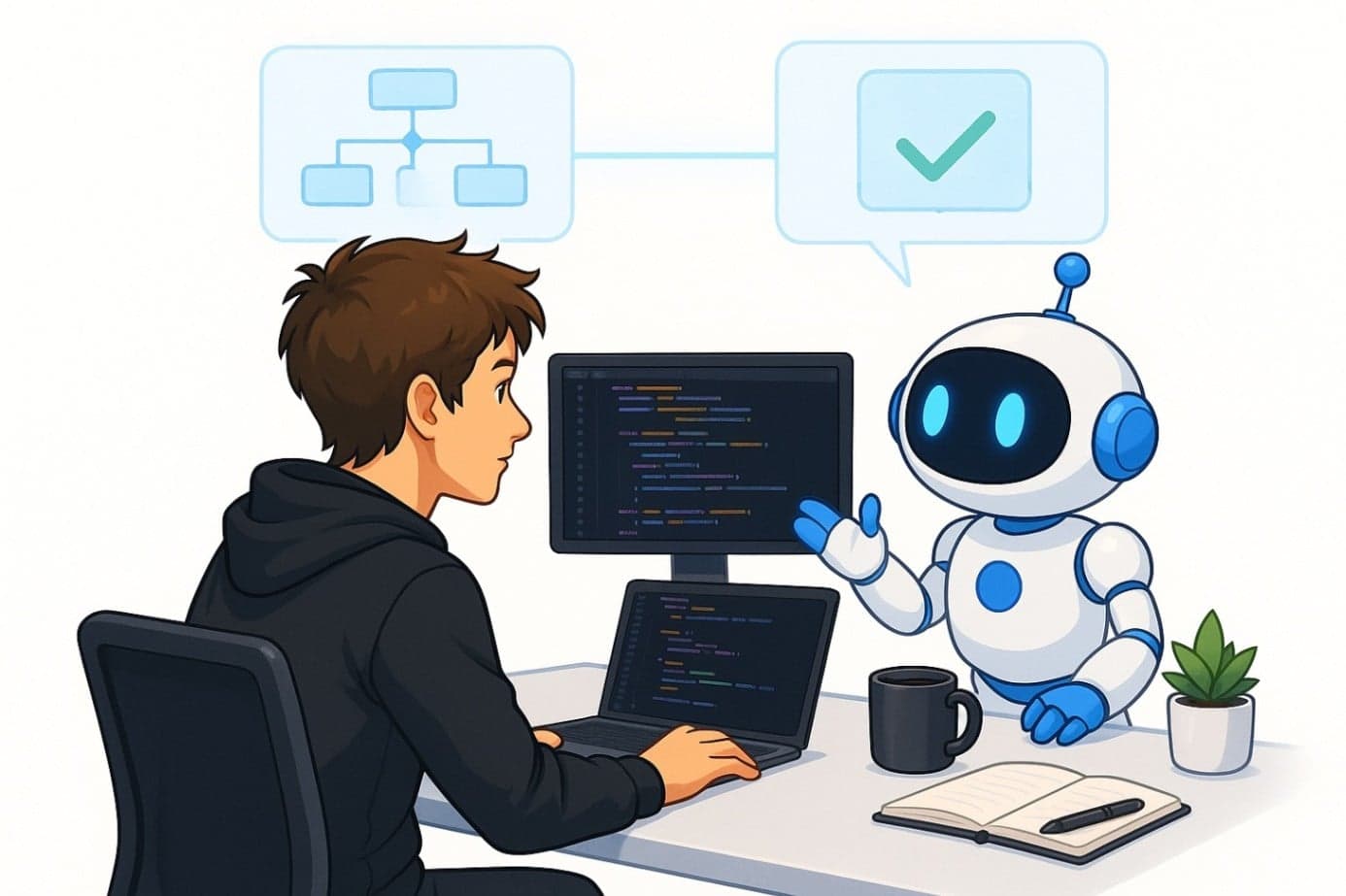
Coding agents are amazing at making quick implementations. However, now that coding has become a commodity, one of the main bottlenecks is the knowledge transfer between a human brain and the coding agent.
If an idea is presented correctly to the coding agent, it is extremely effective at implementing the solution, testing it, and ensuring the correct implementation. However, in a lot of cases, there are a lot of details, and it’s really hard to ensure all the details are included when you prompt the coding agent.
Why align with coding agents
Coding agents are incredibly good at implementing things if they’re given a very specific and well-described spec. However, creating this well-described spec is harder than you might think. There are always a lot of nuances that are hard to cover:
You might forget to mention some parts of what has to be implemented.
You might be unaware of a decision you have to make regarding the implementation.
There might be ambiguities in your explanation.
You don’t have full context because you’re not fully aware of everything that’s in the codebase, especially now that a lot of code is written by AI. This is why coding agent alignment is so hard.
How to align with your coding agents
Agents always go to the default solution. The coding agent will typically look at previous implementations of something similar in your repository, replicate that, and do it again. This means that if your code repository is poorly organized and you ask the coding agent to implement a new feature, the coding agent will likely continue the poor pattern from before and place the new feature in a sub-optimal manner. Ensure your codebase has good patterns throughout and that you refactor your code on a regular basis.
Active usage of plan mode. An important technique to align with your coding agents is to actively use plan mode whenever interacting with them. Plan mode helps you identify ambiguities between the implementation that you’re envisioning and the current codebase. Whenever you want to implement a new feature, you should use plan mode to discuss what you’re envisioning, what problems the LLM can see, and how you can resolve those issues.
Provide the coding agent as much context as possible. Another reason for misalignment is that the engineer possesses context that hasn’t been provided to the LLM. For example, if you need to use a cheaper model due to cost constraints but forget to tell the agent, the implementation will be unusable. To prevent this from happening, you need to give the coding agent as much context as possible. You should give the coding agent access to meeting note transcripts, chat channels, documentation, and everything else that might be useful knowledge and context.
Conclusion
A very common issue with engineers and coding agents is that they’re not fully aligned on what they want to implement. By actively using plan mode, understanding default agent behaviors, and providing complete context, you can make sure you’re as aligned as possible, which in turn makes the implementation and coding more effective.
Source Reference: Towards Data Science - How to Effectively Align with Claude Code by Eivind Kjosbakken (https://towardsdatascience.com/how-to-effectively-align-with-claude-code/)